
Revision summary
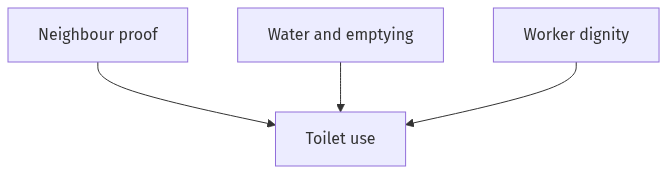
Swachh Bharat is a habit campaign as well as a construction campaign. Social proof from neighbours and schools works better than a distant slogan. Persuasion must not communalise dirt or shame the poor. Objective steps are water, pit emptying, Gram Sabha maps, worker dignity, and use-based rewards. Shaming and photo-only ODF boards produce fake compliance.
Model answer
Introduction
Swachh Bharat asked India to change a daily habit, not only to build a toilet. Social influence and persuasion are the tools that make that habit a neighbourhood norm rather than a poster.
Body
What already worked in outline
- Celebrity and political messaging gave permission to talk about toilets in public.
- Local natural leaders, nigrani samitis, and schoolchildren modelled use, which is social proof.
- Fiscal pressure and later legal rules against open defecation in some local bodies added a hard edge after persuasion.
Ethical persuasion design
- Tell the truth about disease and dignity; do not communalise dirt or shame a caste as unclean.
- Show neighbours who already use a toilet, which is stronger than a distant slogan.
- Use women and persons with disability as designers of the facility, not only as pictures on a banner.
- Keep a grievance path when a toilet was counted but has no water or a pit.
Objective suggestions
- Map remaining open-defecation spots with Gram Sabha lists, not only with a dashboard photograph.
- Tie every new toilet to a working water point and a pit-emptying service, so persuasion is not mocked by failure.
- Run school-led morning watches as peer influence, with adult protection against bullying.
- Publish ward-wise faecal sludge schedules so that urban persuasion matches a real truck, not a speech.
- Reward communities for verified use, not for construction photographs alone.
- Train sanitation workers with dignity, gear, and contracts; a campaign that hides their caste injury is dishonest persuasion.
- Use local language radio and self-help groups for menstrual and plastic waste, which the first toilet phase under-served.
- Measure success by water quality, child stunting trends, and user reports, not only by a declared open-defecation-free board.
What to avoid
- Public shaming of women and the poor produces fake compliance and mental harm.
- A one-day cleanliness drive without a waste contract is theatre.
Flow diagram
Conclusion
Swachh Bharat needs influence that makes use normal and persuasion that stays truthful. The objective path is water, pit emptying, worker dignity, and verified use, not a louder slogan.
Quick related
Students also ask
-
Our attitudes towards life, work, other people and society are generally shaped unconsciously by the family and social surroundings in which we grow up. Some of these unconsciously acquired attitudes and values are often undesirable in the citizens of a modern democratic and egalitarian society. (a) Discuss such undesirable values prevalent in today's educated Indians. (b) How can such undesirable attitudes be changed and socio-ethical values considered necessary in public services be cultivated in the aspiring and serving public servant? Discuss.
Next question in the 2025 paper (Q18). View answer →
-
Is a fine for open defecation persuasion?
A fine is coercion. It may follow persuasion. Used alone on the poorest without a usable toilet, it is unjust.
-
Do celebrities replace local proof?
They open the topic. Lasting use usually follows neighbours, water, and a pit that works.
Same topic · past papers
UPPSC has asked this before
These previous-year questions sit on the same topic. Open one to practise the earlier ask.
-
2020 · Q19 · UPGS4 · 12 marks
Social influence and persuasion contributed in controlling the spread of the Corona Virus in India. Discuss. -
2025 · Q8 · UPGS4 · 8 marks
How can social influence and persuasion be ethically employed in a public information campaign by public servants? Explain. -
2022 · Q13 · UPGS4 · 12 marks
What do you understand by social influence? How can social influence and persuasion bring out behavioural change? -
2023 · Q10 · UPGS4 · 8 marks
What is the role of social influence in public administration? Elucidate with examples.
More from this paper
Q1 · UPSC Mains 2025 · UPGS4 · 8 marks · Solution
Defining value; explain the distinctive features of human values and the role of the family in inculcating these values.
Civil Service aptitude and values
A value is a stable standard that guides worthy choice, not a passing mood. Human values are taught, claim universal worth, join conscience to conduct, and can be justified in public. The family is the first school of trust, empathy, and honour through daily example. A closed home can also plant prejudice, so the family’s power is not automatically ethical. Later schools and offices confirm or correct that first map.
Q2 · UPSC Mains 2025 · UPGS4 · 8 marks · Solution
Evaluate the contemporary relevance of Chanakya's life and thoughts in the context of ethical and people-centric governance.
Emotional Intelligence
Kautilya judges the ruler by the happiness and security of subjects. Yogakshema, a tested service, and honest accounts remain usable tests of ethical administration. Danda is lawful restraint of the strong, not personal cruelty. A democracy cannot import palace deceit; rights and publicity now bind the officer. The living lesson is welfare plus fiscal integrity under the Constitution.
Q3 · UPSC Mains 2025 · UPGS4 · 8 marks · Solution
Discuss the Aristotelian view of virtues and its application in administrative affairs.
Emotional Intelligence
Aristotle’s moral virtue is a stable habit of the mean, learned by practice. Courage, temperance, and justice are civic virtues an officer must show in files, not only in speech. Phronesis is practical wisdom that finds the right mean in a live case. Administration applies this as honest noting, fiscal restraint, and equal treatment. Office culture can train vice; example and rules can still rebuild the mean.