
Revision summary
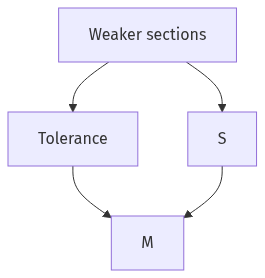
Weaker sections often meet the State as fear, and mental health includes dignity at that meeting. Tolerance refuses to treat a slow or different claimant as an enemy. Sympathy uses discretion as a second date, a help desk, and a care referral, not as pity that strips agency. The Mental Healthcare Act names dignity; the tehsil must not undo it. A clean desk with a sneer still harms public mental health.
Model answer
Introduction
- Weaker sections often meet the State first as fear: a queue, a police desk, or a rejected form. Tolerance and sympathy are the officer’s tools that keep that meeting from becoming a second wound.
Body
Who is at stake
- Weaker sections here include the poor, Dalits, Adivasis, minorities, persons with disability, women facing violence, and the mentally ill themselves.
- Mental health is not only a hospital file; it is dignity in a public office, safety from humiliation, and a chance to be heard.
- Stigma already isolates these groups; an impatient counter confirms the stigma.
Why tolerance
- Tolerance is the refusal to treat a slow speaker, a different language, or a trembling claimant as an enemy of the office.
- Many claimants carry trauma; a raised voice can look like the same power that hurt them at home or in the street.
- Constitutional fraternity is institutional tolerance: the officer does not have to share a belief to protect a right.
- Without tolerance, “discipline” becomes caste or communal irritation dressed as procedure.
Why sympathy
- Sympathy is accurate concern for another’s distress, close to empathy, that changes how a discretion is used.
- It is giving a second date instead of a sneer, a help desk instead of a closed window, and a referral to care instead of a joke.
- For mental health promotion it is also the officer’s own referral pathways: ASHA, DMHP, and a non-punitive approach to attempted self-harm.
- Sympathy is not pity that strips agency; it is support that keeps the person as a rights-holder.
Administrative form
- Reasonable accommodation, a quiet room for a distressed applicant, trained staff, and no public shaming of beneficiaries are operational sympathy.
- The Mental Healthcare Act, 2017, names dignity and non-discrimination, which a civil servant must not undo at the tehsil.
- An officer who mocks a distressed poor person may keep a clean desk and still damage public mental health.
Flow diagram
Conclusion
Tolerance stops the office from adding hate to weakness. Sympathy turns discretion into care. Together they are how a civil servant promotes mental health for those who already carry the heaviest stigma.
Quick related
Students also ask
-
How can social influence and persuasion contribute to the success of "Swachh Bharat Abhiyan"? Give your objective suggestions.
Next question in the 2025 paper (Q17). View answer →
-
Is sympathy the same as relaxing every rule?
No. Sympathy is a lawful, respectful use of discretion. It is not a private exemption for a favourite.
-
Does tolerance mean accepting abuse of staff?
No. Staff safety is also a duty. Tolerance is toward the person’s identity and distress, not toward violence in the office.
Same topic · past papers
UPPSC has asked this before
These previous-year questions sit on the same topic. Open one to practise the earlier ask.
-
2024 · Q9 · UPGS4 · 8 marks
Explain your suggestions to promote tolerance and compassion among civil servants to serve better the weaker sections. -
2024 · Q20 · UPGS4 · 12 marks
"An environmental movement led by youth gains popularity through social media, rallies and collaboration with influencers and scientists. With time the movement gained public support and led the government to propose changes in the policy." What will be your stand to cope with the situation as a civil servant? -
2023 · Q1 · UPGS4 · 8 marks
What do you understand by Moral insight? How does it help in the moral situation of civil servants? -
2023 · Q8 · UPGS4 · 8 marks
How can liberality and objectivity be fostered among civil servants? Give your suggestions. -
2023 · Q13 · UPGS4 · 12 marks
Can Bhagavad Gita be an ethical guide for civil servants? Comment.
More from this paper
Q1 · UPSC Mains 2025 · UPGS4 · 8 marks · Solution
Defining value; explain the distinctive features of human values and the role of the family in inculcating these values.
Civil Service aptitude and values
A value is a stable standard that guides worthy choice, not a passing mood. Human values are taught, claim universal worth, join conscience to conduct, and can be justified in public. The family is the first school of trust, empathy, and honour through daily example. A closed home can also plant prejudice, so the family’s power is not automatically ethical. Later schools and offices confirm or correct that first map.
Q2 · UPSC Mains 2025 · UPGS4 · 8 marks · Solution
Evaluate the contemporary relevance of Chanakya's life and thoughts in the context of ethical and people-centric governance.
Emotional Intelligence
Kautilya judges the ruler by the happiness and security of subjects. Yogakshema, a tested service, and honest accounts remain usable tests of ethical administration. Danda is lawful restraint of the strong, not personal cruelty. A democracy cannot import palace deceit; rights and publicity now bind the officer. The living lesson is welfare plus fiscal integrity under the Constitution.
Q3 · UPSC Mains 2025 · UPGS4 · 8 marks · Solution
Discuss the Aristotelian view of virtues and its application in administrative affairs.
Emotional Intelligence
Aristotle’s moral virtue is a stable habit of the mean, learned by practice. Courage, temperance, and justice are civic virtues an officer must show in files, not only in speech. Phronesis is practical wisdom that finds the right mean in a live case. Administration applies this as honest noting, fiscal restraint, and equal treatment. Office culture can train vice; example and rules can still rebuild the mean.