
Revision summary
Family and social attitudes can survive a degree as caste distance, gender contempt, communal forwards, and shortcut worship. They are often unconscious because the home never named them as wrong. Change needs naming in training, mixed contact, and enforcement of existing law. Public servants need constitutional morality, field time with the poor, and appraisals that mark dignity. A service that winks at dowry at home cannot lecture the district.
Model answer
Introduction
Education can polish speech and still leave home-made prejudice in place. Part (a) names those undesirable values. Part (b) asks how to change them and how to grow better values in the public service.
Body
(a) Undesirable values among educated Indians
- Caste distance often survives a degree: endogamy, a separate cup, or a joke at a Dalit colleague can sit beside a human-rights lecture.
- Gender contempt appears as dowry negotiation, interruption of women in meetings, and blame of the survivor rather than the harasser.
- Communal stereotyping is forwarded as “forwarded as received” by people who would demand a footnote in a seminar.
- Credential arrogance treats a farmer or a clerk as a lesser mind, which is educated snobbery rather than merit.
- Shortcut worship treats a paid seat, a donated mark, or a tout as cleverness, not as theft of a public good.
- Display consumption and contempt for sanitation workers show that literacy did not teach trusteeship of the street.
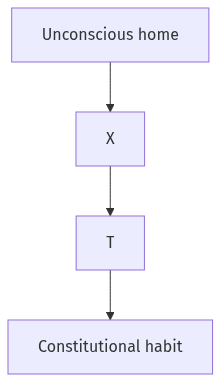
- These are often unconscious because the family never named them as wrong.
(b) Change in society and cultivation in public servants
- Name the attitude in training with local cases, not only with imported slogans, so that the unconscious becomes discussable.
- Mix hostels, sports, and work teams across caste and gender so that contact, not only a chapter, does the teaching.
- Enforce the law that already exists: anti-dowry, POSH, SC/ST atrocity provisions, and service rules on courtesy.
- Public servants need a curriculum of constitutional morality, field time with the poorest, and mentors who reward a clean file over a connected one.
- Appraisal should mark integrity and citizen dignity, not only revenue and ribbon cuttings.
- Recusal, rotation, and punishment for a communal or caste remark in office teach faster than a poster.
- Family outreach is limited, but an officer’s own home example still matters; a service that winks at dowry in the colony will not lecture the district.
- Cultivation is therefore law plus example plus mixed experience, repeated until the new habit feels normal.
Flow diagram
Conclusion
Educated India still carries caste distance, gender contempt, communal forwards, and shortcut worship. Change is naming, mixing, and enforcing. Public servants grow socio-ethical values when the Constitution is lived in the file and in the colony.
Quick related
Students also ask
-
What do you understand by "moral integrity" and "professional efficiency" in the context of corporate governance in India? Discuss with suitable examples.
Next question in the 2025 paper (Q19). View answer →
-
Does a university degree prove ethical values?
No. A degree proves a credential. Values are shown in marriage, office jokes, and whether a tout is treated as clever.
-
Can training alone reform an officer?
Training names the attitude. Transfer, punishment, and the example of seniors decide whether the new name sticks.
Same topic · past papers
UPPSC has asked this before
These previous-year questions sit on the same topic. Open one to practise the earlier ask.
More from this paper
Q1 · UPSC Mains 2025 · UPGS4 · 8 marks · Solution
Defining value; explain the distinctive features of human values and the role of the family in inculcating these values.
Civil Service aptitude and values
A value is a stable standard that guides worthy choice, not a passing mood. Human values are taught, claim universal worth, join conscience to conduct, and can be justified in public. The family is the first school of trust, empathy, and honour through daily example. A closed home can also plant prejudice, so the family’s power is not automatically ethical. Later schools and offices confirm or correct that first map.
Q2 · UPSC Mains 2025 · UPGS4 · 8 marks · Solution
Evaluate the contemporary relevance of Chanakya's life and thoughts in the context of ethical and people-centric governance.
Emotional Intelligence
Kautilya judges the ruler by the happiness and security of subjects. Yogakshema, a tested service, and honest accounts remain usable tests of ethical administration. Danda is lawful restraint of the strong, not personal cruelty. A democracy cannot import palace deceit; rights and publicity now bind the officer. The living lesson is welfare plus fiscal integrity under the Constitution.
Q3 · UPSC Mains 2025 · UPGS4 · 8 marks · Solution
Discuss the Aristotelian view of virtues and its application in administrative affairs.
Emotional Intelligence
Aristotle’s moral virtue is a stable habit of the mean, learned by practice. Courage, temperance, and justice are civic virtues an officer must show in files, not only in speech. Phronesis is practical wisdom that finds the right mean in a live case. Administration applies this as honest noting, fiscal restraint, and equal treatment. Office culture can train vice; example and rules can still rebuild the mean.