
Revision summary
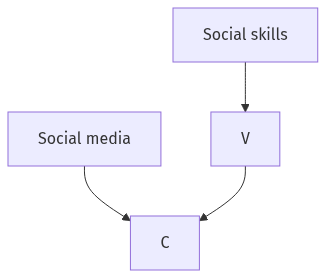
Social media speeds speech and also fraud, bullying, and rumour. Social skills now include a pause before forwarding, source checking, and consent before tagging. Phishing uses fake urgency; slow verification is the matching skill. Peers who refuse to share a morph cut the fuel of cyber bullying. Officers must not treat a personal handle as a court, and they can still teach calm verification.
Model answer
Introduction
Social media multiplies speech and also fraud, bullying, and rumour. Social skills are the habits that keep connection human when the medium rewards speed and anonymity.
Body
Why social skills matter online
- Empathy is harder on a screen, so a trained pause before a forward is now a civic social skill.
- Listening and checking a source replace the old village habit of asking who said a thing.
- Assertiveness without insult is the skill of reporting abuse and still not joining a pile-on.
- Digital etiquette includes consent before tagging a face, especially a child’s face.
- Conflict skill is knowing when to mute, when to rebut with fact, and when to go to the police.
Cyber crime context
- Phishing and investment fraud exploit trust and urgency, which social skill counters by slow verification.
- Cyber bullying and morphing attack dignity; peers who refuse to share the clip cut the harm’s fuel.
- Deepfakes and rumour during unrest need officers and citizens who can say “not confirmed” in public.
- The Information Technology Act and the Bharatiya Nyaya Sanhita give legal tools, but they arrive after the forward.
- Prevention is therefore a social skill: privacy settings, password care, and refusing to humiliate.
For public servants
- An officer’s handle is easily read as an official finding, so social skill includes silence on a pending inquiry.
- Outreach against cyber fraud can use the same platforms that carry the crime, if the message is calm and exact.
Flow diagram
Conclusion
Social skills in the social-media age are pause, verification, consent, and refusal to amplify harm. They do not replace criminal law, but they shrink the audience that cyber crime needs.
Quick related
Students also ask
-
Discuss the practical utilities of induced compliance in administration.
Next question in the 2025 paper (Q10). View answer →
-
Is blocking someone a failure of social skill?
No. Muting abuse can be self-respect and de-escalation. Skill is choosing mute, fact, or police, not enduring harm.
-
Should every rumour be rebutted by an officer online?
Only with verified facts and without naming accused persons as if already convicted. Silence can be wiser during inquiry.
Same topic · past papers
UPPSC has asked this before
These previous-year questions sit on the same topic. Open one to practise the earlier ask.
-
2024 · Q3 · UPGS4 · 8 marks
Discuss the various skills by which a public servant may enhance public commitment to the rules of law. -
2025 · Q20 · UPGS4 · 12 marks
You hold a responsible position in district. One day in the morning you received a call from the school of your 11-year-old son that you are required to come and meet the principal. You proceed to the school and find your son in the principal's office. The principal informs you that your son had been found wandering aimlessly in the ground during the time classes were in progress. The class teacher further informs you that your son has lately become a loner and did not respond to the questions in the class, he has also been unable to perform well in the football trials held recently. You bring your son back from the school and in the evening along with your wife try to find out the reasons for your son's changed behaviour. After repeated cajoling your son shares that some children had been making fun of him in the class as well as in the WhatsApp group of the student by calling him stunted, stupid and frog. He tells you the names of a few children who were the main culprits but pleaded with you to let the matter rest. After a few days, during a sporting event, where you and your wife have gone to watch your son play, one of your colleague's son shows you a video in which students have caricatured your son. Further, he also points out to the perpetrators who were sitting in the stand. You purposefully walk past them with your son and go home. Next day you find on social media, a video denigrating you, your son and even your wife, stating that you were engaged in physical bullying of children on the sports field. The video became viral on social media. Your friends and colleagues began calling you to find out the details. One of your juniors advised you to make a counter video giving the background and explaining that nothing had happened on the field. You, in turn, posted a video which you had captured during the sports event, identifying the likely perpetrators who were responsible for your son's predicament. You have also narrated what has actually happened in the field and made attempts to bring out the adverse effects of the misuse of social media. (a) Based on the above case study, discuss the ethical issues involved in the use of social media. (b) Discuss the pros and cons of using social media by you to put across facts to counter the fake propaganda against your family. -
2024 · Q20 · UPGS4 · 12 marks
"An environmental movement led by youth gains popularity through social media, rallies and collaboration with influencers and scientists. With time the movement gained public support and led the government to propose changes in the policy." What will be your stand to cope with the situation as a civil servant? -
2023 · Q17 · UPGS4 · 12 marks
Nowadays social media is used to influence public opinion either positively or negatively. Being a civil servant, how will you solve this issue?
More from this paper
Q1 · UPSC Mains 2025 · UPGS4 · 8 marks · Solution
Defining value; explain the distinctive features of human values and the role of the family in inculcating these values.
Civil Service aptitude and values
A value is a stable standard that guides worthy choice, not a passing mood. Human values are taught, claim universal worth, join conscience to conduct, and can be justified in public. The family is the first school of trust, empathy, and honour through daily example. A closed home can also plant prejudice, so the family’s power is not automatically ethical. Later schools and offices confirm or correct that first map.
Q2 · UPSC Mains 2025 · UPGS4 · 8 marks · Solution
Evaluate the contemporary relevance of Chanakya's life and thoughts in the context of ethical and people-centric governance.
Emotional Intelligence
Kautilya judges the ruler by the happiness and security of subjects. Yogakshema, a tested service, and honest accounts remain usable tests of ethical administration. Danda is lawful restraint of the strong, not personal cruelty. A democracy cannot import palace deceit; rights and publicity now bind the officer. The living lesson is welfare plus fiscal integrity under the Constitution.
Q3 · UPSC Mains 2025 · UPGS4 · 8 marks · Solution
Discuss the Aristotelian view of virtues and its application in administrative affairs.
Emotional Intelligence
Aristotle’s moral virtue is a stable habit of the mean, learned by practice. Courage, temperance, and justice are civic virtues an officer must show in files, not only in speech. Phronesis is practical wisdom that finds the right mean in a live case. Administration applies this as honest noting, fiscal restraint, and equal treatment. Office culture can train vice; example and rules can still rebuild the mean.