
Revision summary
User-centric e-governance starts from the citizen’s journey; many projects start from ID, ledger and dashboard. NeGP, GSTN, Aadhaar and PFMS are strong backs; language, OTP-on-one-phone and failed biometrics are weak fronts. 2nd ARC, Sevottam and public-service guarantee laws already asked for time-bound citizen outcomes. DPDP and RPwD add consent and accessibility duties. Correction: assisted kiosks, local language, offline fallback, and the same data for the ward as for the secretary.
Model answer
Copper italics in this answer — like this — are the key facts. Each one is unpacked in the Facts & figures rail.
Introduction
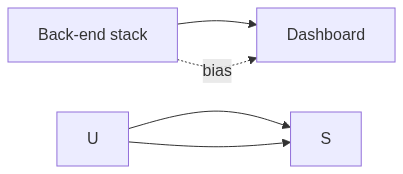
E-governance aims to use technology to make governance efficient, transparent, accountable and citizen-centric. However, many projects have evolved from the back-end outward—through databases, unique IDs, APIs and dashboards—rather than from the citizen’s actual service journey. Thus, the issue is not excessive technology itself, but a design-order bias: building the warehouse before the door.
Body
How the bias towards technology and back-end integration emerges
- Database-centric design: Projects often prioritise registries, unique identifiers, interoperability and data integration before simplifying the citizen interface.
- Examples: Aadhaar/UIDAI, GSTN, PFMS, India Stack and state service-delivery gateways demonstrate strong back-end integration through identity, payments, databases and APIs.
- Administrative rather than citizen perspective: Systems are frequently designed around what ministries need to monitor rather than what citizens need to complete a service.
- 2nd ARC: Emphasised that e-governance should involve process re-engineering and citizen service, rather than merely computerising existing files.
- Technology-first procurement: Large technology systems and infrastructure are easier to measure and procure than improvements in user experience, accessibility or trust.
- Result: Government dashboards may show successful transactions while the citizen still struggles with the actual service journey.
Manifestations at the front end
- Digital divide: Technology-heavy systems can exclude citizens with poor connectivity, low digital literacy or limited access to devices.
- Example: Portals requiring English, captchas or OTPs can disadvantage elderly persons, migrants and households where the mobile phone is not personally controlled by the beneficiary.
- Authentication over access: A technically successful authentication system does not necessarily mean successful service delivery.
- Example: Aadhaar authentication may fail for elderly persons or outdoor workers despite the underlying entitlement being genuine.
- Urban and language bias: Platforms may assume smartphones, reliable internet and standard languages, making rural and linguistically diverse users relatively disadvantaged.
- Example: CoWIN demonstrated the contrast between a strong national digital back end and difficulties relating to rural connectivity and language.
Consequences of the bias
- Exclusion and denial of entitlements: A technical failure can become a barrier to welfare, identity or public services.
- Loss of human discretion: Rigid automated rules may reject genuine beneficiaries because of data mismatches, leaving little room for contextual judgment.
- Weak accountability: Departmental dashboards may measure whether a transaction was completed rather than whether the citizen actually received the intended outcome.
- Example: Sevottam and Right to Public Services frameworks emphasise time-bound citizen services, but technology must measure actual service delivery rather than merely backend processing.
- Privacy concerns: Large-scale integration of personal data increases the importance of consent, lawful processing and data protection.
- Example: The DPDP Act, 2023 requires e-governance systems to incorporate lawful processing and appropriate safeguards for personal data.
Towards genuinely user-centric e-governance
- Citizen journey first: Design the service around what a first-time user actually needs to accomplish, and build the technology architecture around that journey.
- Test: Can a citizen complete the service in a local language, with assistance, without unnecessary visits or paperwork?
- Human-centric interface: Provide local-language interfaces, simple navigation, assisted kiosks and accessible design.
- Offline fallback: Digital failure should not mean denial of a legal entitlement; offline and assisted alternatives should remain available.
- Human grievance redressal: Automated decisions should have an accessible human appeal mechanism.
- Example: CPGRAMS can provide the institutional layer through which digital service failures are converted into accountable grievance resolution.
The challenge is not to choose between technology and citizens, but to align technology with citizen needs. India’s strong digital infrastructure should therefore be retained while reversing the design sequence: citizen journey → accessible interface → grievance redressal → back-end integration. The ultimate measure of e-governance is not the sophistication of the data centre but whether the last citizen receives the service efficiently, fairly and with dignity.
Flow diagram
Conclusion
The challenge is not to choose between technology and citizens, but to align technology with citizen needs. India’s strong digital infrastructure should therefore be retained while reversing the design sequence: citizen journey → accessible interface → grievance redressal → back-end integration. The ultimate measure of e-governance is not the sophistication of the data centre but whether the last citizen receives the service efficiently, fairly and with dignity.
Quick related
Students also ask
-
The Citizens' charter has been a landmark initiative in ensuring citizen-centric administration. But it is yet to reach its full potential. Identify the factors hindering the realisation of its promise and suggest measures to overcome them.
Next question on this syllabus topic (2024 · Q16). View answer →
-
Does this mean Aadhaar was a mistake?
No. It means authentication and the service journey are different problems. A unique number does not by itself make a usable clinic token.
-
What is a simple user-centric test?
Can a first-time user complete the task in the local language, with help at a kiosk, without a printout from another office?
Same topic · past papers
UPSC has asked this before
These previous-year questions sit on the same topic. Open one to practise the earlier ask.
-
2019 · Q8 · GS II · 10 marks
Implementation of information and Communication Technology (ICT) based Projects / Programmes usually suffers in terms of certain vital factors. Identify these factors, and suggest measures for their effective implementation. -
2018 · Q15 · GS II · 15 marks
Assess the importance of the Panchayat system in India as a part of local government. Apart from government grants, what sources the Panchayats can look out for financing developmental projects? (15).
More from this topic
Q16 · UPSC Mains 2026 · GS II · 15 marks · Solution
"Transparency and accountability in governance are not about controlling corruption but about creating the trust of stakeholders in the policy process by following the Rule of Law and Participatory Governance." Comment.
Transparency and e-Governance
• Transparency and accountability go beyond stopping corruption to build positive systemic trust and institutional legitimacy. • They anchor the Rule of Law by ensuring predictable policies, preventing arbitrary executive abuse, and offering procedural fairness. • Participatory governance transforms top-down administration into a collaborative compact through citizen engagement. • Pre-legislative consultations and platforms like MyGov allow substantive public input before laws are finalized. • Social audits, such as those under MGNREGA, empower grassroots stakeholders to verify implementation and course-correct locally. • State machinery functions best when administrative actions are justifiable, fair, and rooted in public interest. • Embedding these elements into administrative DNA fulfills the constitutional promise of securing justice and fraternity for all.
Q18 · UPSC Mains 2024 · GS II · 15 marks · Solution
e-governance is not just about the routine application of digital technology in service delivery process. It is as much about multifarious interactions for ensuring transparency and accountability. In this context, evaluate the role of the 'Interactive Service Model' of e-governance.
Transparency and e-Governance
E-governance is not only digitising a counter; it is multi-way interaction for transparency and accountability. The Interactive Service Model is two-way apply–track–grieve–reply, the top of the usual model ladder. Indian examples: UMANG, CPGRAMS, Passport Seva, RTI Online, GST replies, GeM. Gains: time-stamped trails. Losses: digital divide, kiosk touts, privacy risk, vanity dashboards. Assisted access and honest back-ends decide whether the model is real. Direct Benefit Transfer is interactive only when failure can be queried.
Q16 · UPSC Mains 2024 · GS II · 15 marks · Solution
The Citizens' charter has been a landmark initiative in ensuring citizen-centric administration. But it is yet to reach its full potential. Identify the factors hindering the realisation of its promise and suggest measures to overcome them.
Transparency and e-Governance
Citizens’ Charters, after the 1997 Chief Ministers’ conference, promise standards, time, information and grievance. They stall for want of legal force, measurable clocks, compensation, staff ownership and public awareness. Sevottam tried quality certification; many charters remain posters. State Right to Service Acts with penalties are the working Indian upgrade. Dashboards, local-language co-drafting and third-party audit would close the gap. RTI is about information; a charter is about the service clock — they stack.