
Revision summary
Social media speeds speech and also rumour, hate, privacy harm and blurred official voice. The ethical knots are truth versus virality, privacy versus publicity, and freedom versus incitement. Constitutional morality, as Ambedkar taught, is learned respect for constitutional forms, not a natural feeling. For a civil servant it means equality, dignity, reasoned process and files that can face a court. Good governance and accountability rest on that habit when popular anger or a minister wants a shortcut.
Model answer
Copper italics in this answer — like this — are the key facts. Each one is unpacked in the Facts & figures rail.
Introduction
A phone is now a public square, a rumour mill and a file. Part (a) asks what ethical knots that square ties. Part (b) asks the civil servant to live by constitutional morality, which Dr Ambedkar said is not a natural sentiment. Together they are one paper: how we speak, and what law we obey when we speak for the State.
Body
(a) Ethical dilemmas of social media
Truth versus speed. A forward can ruin a person before a fact-check. The dilemma is between freedom of speech (Article 19) and harm (dignity, riot, suicide). Kant’s test — would I will a world of untested accusation? — says no. Mill’s harm principle says the State may step in when speech incites violence, not when it merely offends.
Privacy versus publicity. A viral video of a patient or a child is a dignity wound. The right to privacy after Puttaswamy is an ethical floor, not only a case name.
Identity versus civic friendship. Algorithms reward anger. Communal and gendered hate is easy; fraternity (the Preamble) is hard. The dilemma for a public servant is whether to mute, rebut, or ignore. Silence can be prudence; it can also be cowardice.
Opacity of the platform. A private company curates a public sphere. Who owes accountability — the user, the firm, or the State? Over-censorship is another dilemma: a takedown can hide a genuine whistle-blower.
Professional boundary. An officer’s personal handle can look like an official verdict. Integrity here is not using the office to trend.
(b) Constitutional morality for the public servant
- Ambedkar, borrowing Grote, said Indians must learn to respect constitutional forms: majority is not licence, office is not property. The Supreme Court has used the phrase in Manoj Narula, Navtej Johar, and the Delhi government cases to mean reason, equality, dignity and institutional process.
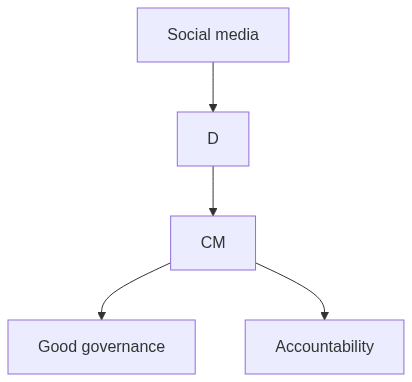
For a civil servant this is not poetry. It is Article 14 in a licence, Article 21 in a demolition, neutrality in a communal file, and rule of law when a minister wants a shortcut. Good governance is predictable, reasoned, recorded action. Accountability is the file that can be shown to a court, a CAG, and a citizen. Constitutional morality is the habit that makes those three possible when popular morality or political pressure pulls the other way.
Gandhi wanted means as clean as ends. Ambedkar wanted forms that protect the weak. The officer needs both: a clean hand and a constitutional head.
Flow diagram
Conclusion
Social media creates dilemmas of truth, privacy, hate and official voice. Constitutional morality is the trained respect for rights and process that lets a public servant govern fairly and answer for every file, even when the crowd is loud.
Quick related
Students also ask
-
Should an IAS officer run a political Twitter account?
A personal civic voice is one thing. Using official authority or confidential files to trend is a breach of integrity and of service rules.
-
Is constitutional morality the same as public opinion?
No. Public opinion can be a majority’s prejudice. Constitutional morality is the document’s promise to the minority and to due process.
More from this topic
UPSC Mains 2025 · GS IV · 10 marks · Solution
(a) Carl von Clausewitz once said, "War is a diplomacy by other means." Critically analyse the above statement in the present context of contemporary geo-political conflict. (b) Keeping the national security in mind, examine the ethical dilemmas related to controversies over environmental clearance of development projects in ecologically sensitive border areas in the country.
Ethics in Public Administration
Clausewitz is right that wars have political aims; he is incomplete because civilians, nuclear weapons and non-state actors change the moral math. Just-war rules and Gandhi’s stress on means still bind a democracy. Border projects pit delay-as-threat against forest, landslide and tribal consent. The ethical path is necessity with least harm, not a fake choice between soldier and tree. Integrity is a file that records both the threat and the ecology.
Q5(a) · UPSC Mains 2024 · GS IV · 10 marks · Solution
"The 'Code of Conduct' and 'Code of Ethics' are the sources of guidance in public administration. There is code of conduct already in operation, whereas code of ethics is not yet put in place. Suggest a suitable model for code of ethics to maintain integrity, probity and transparency in governance
Ethics in Public Administration
A code of conduct is enforceable do’s and don’ts; a code of ethics states values and how to reason when the rule is silent. India has conduct rules in operation; a living ethics code still needs leaders, cases and whistle protection. A model for integrity, probity and transparency binds the Constitution, public money, reasons on file, impartial queues and data restraint. BNS presents justice, equality and impartiality as its soul and adds victim-centric and community-service tools. The shift from punishment to justice fails if new sections only warehouse the poor.
Q5 · UPSC Mains 2023 · GS IV · 10 marks · Solution
(a) Is conscience a more reliable guide when compared to laws, rules, and regulations in the context of ethical decision-making. Discuss (b) Probity is essential for an effective system of governance and socio-economic development. Discuss.
Ethics in Public Administration
Conscience is inner judgement; laws are shared public standards. Conscience can see unnamed harm and can resist an unjust law; it is also partisan and unequal across persons. A civil servant’s default is lawful rules plus written dissent, not a private veto. Ethical decisions need both a legal file and an inner test against cruelty. Probity is upright use of office; without it, governance becomes a favour market and development leaks. Trust, investment and the poor’s access to services all depend on that uprightness.