
Revision summary
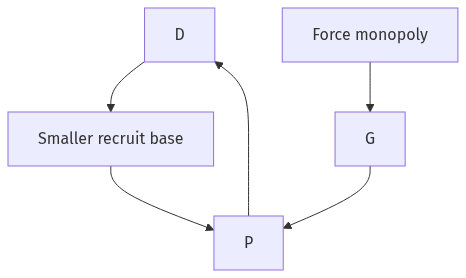
Security in India includes social peace, not only the border. Development in poor and conflict districts cuts the labour supply of militancy. The budget of the armed forces and police itself comes from a growing economy. Without security, investment and schools do not survive in a conflict zone. The two fail if they are sequenced as guns first, goods never, or goods without order.
Model answer
Introduction
India’s security is not only borders and guns. A hungry, jobless, or unconnected district produces crime, insurgency, and easy recruits. Development that never arrives is therefore a security failure, and security that blocks roads and schools is a development failure.
Body
Development as security
- Roads, schools, clinics, and bank accounts in the North-East, Left-Wing Extremism belts, and border blocks reduce the space in which a militant is the only employer.
- MGNREGA, housing, and digital payments are not soft extras; they are how the State becomes visible without only a camp.
- A growing formal economy funds the military, police, and disaster machine that hard security needs.
Security as development
- Without a monopoly of force, no factory, tourist trail, or school stays open in a conflict district.
- Coastal, cyber, and internal security protect the very logistics that GDP rides on.
- Over-securitisation can freeze civil life; the symbiotic claim therefore includes rights and local politics, not only more battalions.
India’s practical mix
- Border infrastructure, Aspirational Districts, and insurgency surrender-plus-rehab packages try to run both tracks together.
- Kashmir, the North-East, and LWE experience show that a road without a political settlement, or a settlement without a road, both fail.
The relationship is symbiotic because each is the condition of the other, not a slogan that one can replace the other.
Flow diagram
Conclusion
For India, development shrinks the social base of conflict, and security lets that development stand. The pair works only when force and public goods move together, not in turns.
Quick related
Students also ask
-
Suggest some effective strategies for reducing the risk of man-made disasters like industrial accidents, terrorist attacks and fires.
Next question in the 2025 paper (Q20). View answer →
-
Can development replace the army in a hot conflict?
No. It reduces the base over time. Force is still needed while violence is live.
-
Is this only about insurgency?
No. Urban crime, coastal security, and disaster resilience also need both order and public goods.
Same topic · past papers
UPPSC has asked this before
These previous-year questions sit on the same topic. Open one to practise the earlier ask.
-
2020 · Q10 · UPGS3 · 8 marks
What is 'Revolution in Military Affairs (RMA)' in the security perspective of India?
More from this paper
Q1 · UPSC Mains 2025 · UPGS3 · 8 marks · Solution
Identify the critical challenges faced by the handicraft industries in India and discuss their challenges.
Food processing
Handicrafts are large in jobs but weak in organisation. Costly inputs, middlemen, and machine-made copies cut the artisan’s price. Credit, GST paperwork, and export compliance are hard for household units. GI tags and e-commerce help some clusters, not the whole sector. The challenge is to move skill, credit, and direct sale to the maker.
Q2 · UPSC Mains 2025 · UPGS3 · 8 marks · Solution
"Construction of new airports will facilitate industrialization and development in India." Examine.
Infrastructure
Airports can shorten time to markets and support logistics jobs. UDAN tries to spread air access beyond metros. Land, wetlands, and noise are real costs of greenfield sites. Thin traffic means some airports need heavy subsidy and still do not pull factories. Industrialisation needs hinterland demand, not only a terminal.
Q3 · UPSC Mains 2025 · UPGS3 · 8 marks · Solution
Discuss the concept of unemployment in India as developed by National Sample Survey Office (NSSO).
Poverty, unemployment and inclusive growth
India measures unemployment on more than one reference period because work is often casual. Usual status (ps and ps+ss) uses the last year and usually gives the lowest rate. Current weekly status uses the last seven days. Current daily status counts person-days and captures underemployment. PLFS is the present NSO survey that carries these NSSO concepts.