
Revision summary
States are unlike in size, history, and capacity, so the unit of comparison is not automatic. Conceptual stretching, Galton’s problem, and selection bias are standard difficulties. Data are political products, and language changes the meaning of institutions. Interdependence means States are not independent experiments. Designs such as most-similar cases reduce error; they do not remove it.
Model answer
Copper italics in this answer — like this — are the key facts. Each one is unpacked in the Facts & figures rail.
Introduction
Comparing States is the core of Comparative Politics, yet States differ in size, history, language, and data. The difficulty is to compare without false identity and without giving up generalisation.
Body
Conceptual and unit problems
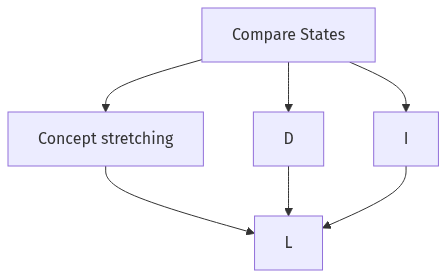
- Sartori’s conceptual stretching appears when one word, such as democracy or federalism, is applied to unlike regimes.
- The State as a unit is not the same object in a small island, a continental federation, and a weak post-conflict territory.
- Galton’s problem appears when States are not independent cases because they copy laws, parties, or constitutions from one another.
Method and data
- Small-N comparison cannot control every variable; large-N work often lacks valid indicators for the same idea in every country.
- Official statistics, election results, and survey items are produced by States and may hide repression or informal power.
- Language, legal tradition, and political culture change the meaning of a vote, a court, or a party label.
Politics of comparison
- Selection bias appears when only successful or only failed States are studied.
- Levels of analysis mix when a scholar compares a cabinet in one country with a whole region in another.
- Robert Keohane’s complex interdependence and world-economy hierarchies mean that two States are never isolated laboratories.
How the field still proceeds
- Most-similar and most-different designs, process tracing, and careful concept formation reduce, but do not erase, these difficulties.
Flow diagram
Conclusion
Comparing States is difficult because concepts, data, dependence among cases, and unequal power distort the objects being compared. The political scientist’s task is disciplined comparison, not the claim that States are identical units.
Quick related
Students also ask
-
How does democratic politics construct citizenship?
Next question on this syllabus topic (2023 · Q1(c)). View answer →
-
Should comparison be abandoned because States differ?
No. Difference is the reason to compare. The requirement is clear concepts and honest limits.
-
Is a single-country study not comparative?
It becomes comparative when it uses concepts and questions that other cases can also answer.
Same topic · past papers
UPSC has asked this before
These previous-year questions sit on the same topic. Open one to practise the earlier ask.
-
2024 · Q4(c) · PSIR GS 2 · 15 marks
Do you agree with the view that the EU has thus far proved to be the most successful experiment in the regional integration processes? Account for its successes and also some of the recent challenges that it is faced with. -
2022 · Q1(b) · PSIR GS 2 · 10 marks
What are the main challenges faced by the developing countries in the era of globalisation?
More from this topic
Q7(a) · UPSC Mains 2026 · PSIR GS 2 · 20 marks · Solution
How does illegal cross border migration pose challenges to India's security? Discuss the steps taken by the government in this direction and their effectiveness
Comparative Politics
Illegal cross-border migration undermines India's national security by altering demographic balances, straining economic resources, and exacerbating internal security vulnerabilities. The government has responded through border fencing, technological integration like SMART fencing, institutional mechanisms, and bilateral agreements. However, porous terrain, regional political complexities, and local connivance limit the complete effectiveness of these measures. A holistic approach combining strict border management with socio-economic development and robust legal frameworks is essential for sustainable containment.
Q5(d) · UPSC Mains 2026 · PSIR GS 2 · 10 marks · Solution
Discuss the main features of the land-boundary agreement between India and Bangladesh.
Comparative Politics
• Operationalized via the 100th Constitutional Amendment Act of 2015 to resolve Radcliffe Line anomalies. • Rooted in the unratified 1974 bilateral agreement and the 2011 additional protocol. • Involved the peaceful exchange of 111 Indian enclaves in Bangladesh and 51 Bangladeshi enclaves in India. • Granted affected residents the sovereign right to choose their nationality and place of residence. • Demarcated roughly 6.1 km of previously un-demarcated land boundaries to end administrative confusion. • Secured human rights and welfare access for over 50,000 formerly stateless enclave residents. • Reduced bilateral trust deficits, paving the way for deeper cooperation in security and connectivity.
Q4(c) · UPSC Mains 2026 · PSIR GS 2 · 15 marks · Solution
What is UNCLOS? Explain its salient features
Comparative Politics
UNCLOS, established in 1982, serves as the constitution of the oceans, codifying customary international law regarding maritime jurisdictions. Its salient features include distinct maritime zones ranging from territorial waters to the high seas, balancing coastal state sovereignty with freedom of navigation. It establishes compulsory dispute settlement mechanisms through institutions like ITLOS. The convention also mandates environmental protection and sustainable management of marine resources. For India, UNCLOS provides a rules-based order in the Indo-Pacific while respecting navigational rights. It remains central to addressing contemporary maritime security and resource challenges.