
Revision summary
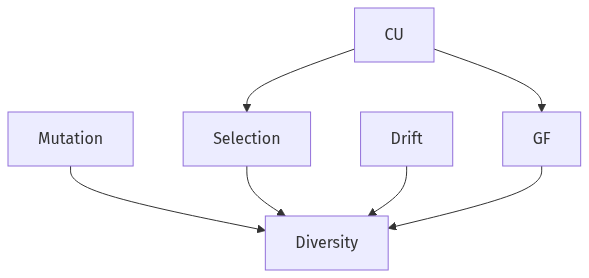
Four genetic forces plus culture make human diversity. Mutation invents; selection sorts; drift rumples small groups; flow mixes. Malaria and dairying are gene–culture cases. Indian data show both isolate drift and long-range mixture. Races as types fail; clines and histories hold.
Model answer
Copper italics in this answer — like this — are the key facts. Each one is unpacked in the Facts & figures rail.
Introduction
Human diversity is patterned difference in genes, bodies, and, by extension, the cultural niches that change survival. Four forces of population genetics, plus culture, make that pattern.
Body
The four forces
- Mutation supplies new alleles. Most are neutral or harmful; a few, like lactase persistence or sickle-cell, matter.
- Selection retains what fits a niche. Malaria shapes haemoglobin. Ultraviolet light and diet shape pigmentation and stature clines, which Livingstone and later geneticists refused to treat as races.
- Drift is strong in small founder groups. Island and tribal isolates, including some Andaman and Himalayan populations, show this.
- Gene flow mixes. Indian caste and tribal history is a story of flow as much as of barrier, which Sanghvi and later autosomal studies mapped.
Culture as a force
- Durham and gene–culture coevolution: dairying selects lactase; yam farming and malaria select sickle cell in West Africa.
- Migration, marriage rules, and cousin preference change effective population size and inbreeding.
What diversity is not
- Typological races are not evolutionary units. Clines and clusters from history are.
- Language and caste are social. They can still structure mating and therefore genes.
Flow diagram
Conclusion
Mutation, selection, drift, and flow, working through culture and marriage, create human diversity. The product is clines and local histories, not a few fixed types.
Quick related
Students also ask
-
Explain the genetic mechanisms of micro and macro evolution
Next question on this syllabus topic (2021 · Q3(b)). View answer →
-
Is culture Lamarckian evolution?
Cultural inheritance is extra-genetic. It still changes selection on genes, which is Darwinian.
-
Does gene flow erase groups?
It blurs boundaries. Social rules can still keep frequencies different for a time.
Same topic · past papers
UPSC has asked this before
These previous-year questions sit on the same topic. Open one to practise the earlier ask.
-
2025 · Q5(b) · Anthropology GS 1 · 10 marks
Evolutionary significance of menopause. -
2024 · Q6(a) · Anthropology GS 1 · 20 marks
Discuss the geographical distribution of Homo erectus. Taking into account its physical features, where does it fit in human evolutionary line? -
2021 · Q8(b) · Anthropology GS 1 · 15 marks
Discuss the physiological and evolutionary theories of aging
More from this topic
Q3(b) · UPSC Mains 2021 · Anthropology GS 1 · 15 marks · Solution
Explain the genetic mechanisms of micro and macro evolution
Synthetic theory of evolution
Microevolution is allele-frequency change in a population. The forces are mutation, selection, drift, gene flow, and non-random mating. Macroevolution is speciation and higher-level pattern in deep time. Punctuated equilibrium and regulatory genes are debated extras, not magic. Hominin splits and isolate drift show both scales in anthropology.