
Revision summary
Dalit identity was produced by movements, not merely discovered by the census. Phule and Ambedkar supplied counter-history, a political name and Buddhist conversion. Panthers, literature, BSP and campus groups nationalised that public. Law and commemoration keep the identity visible. Internal splits exist; they do not cancel the movement-made we.
Model answer
Copper italics in this answer — like this — are the key facts. Each one is unpacked in the Facts & figures rail.
Introduction
- Dalit identity was not a census leftover waiting to be found. Movements made it: a name instead of a slur, a history instead of a karma story, and a public instead of a quarter outside the village. Identity formation here is political self-making.
Body
From stigma to subject
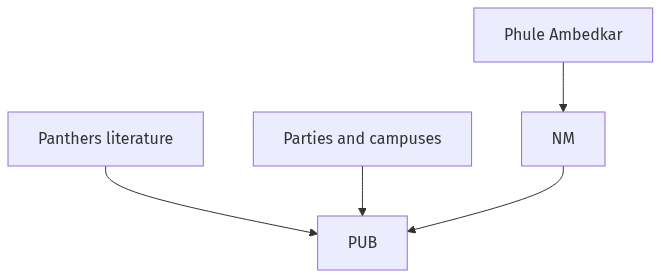
Phule offered shudra-atishudra as a counter-genealogy. Ambedkar turned untouchable into a rights-bearing minority, then Dalit (broken) as a chosen political name, and conversion to Navayana Buddhism (1956) as exit from Hindu hierarchy. Journals, mahila sabhas, and temple-entry satyagrahas taught people to speak as a we. The Mahad tank and Kalaram temple struggles were identity lessons in public space: we will take water and gods that were closed.
Post-Independence Republican politics, Dalit Panthers (1970s Maharashtra) with literature of rage, BSP and bahujan arithmetic, and campus Ambedkarite groups spread a national Dalit public. Autobiography (Pawar, Valmiki, Bama) and commemorations of Bhima-Koregaon or Ambedkar Jayanti are identity technologies. PoA cases and reservation struggles keep the identity legally alive. Film, hip-hop and social media now carry the same we into youth cultures that village studies never saw.
Identity is not frozen. Sub-caste, class, region and gender split the we. Hindu majoritarian offers of incorporation compete with Ambedkarite autonomy. Women’s Dalit writing insisted that the movement’s we had been male. Still, without movements there would be scheduled castes as an administrative heap, not a political identity. Naming, history-telling, religious exit, and party symbols are the four workshops of that identity. Without the movement, the schedule is a file; with it, the schedule becomes a people.
Flow diagram
Conclusion
Dalit movements formed identity by renaming, converting, writing and organising for power. The identity is a project—contested, internally diverse, and still necessary against stigma.
Quick related
Students also ask
-
What is your assessment about the recent farmers' movement in India? Elaborate.
Next question on this syllabus topic (2024 · Q5(e)). View answer →
-
Is ‘Dalit’ the same as Scheduled Caste?
SC is a constitutional list. Dalit is a political-cultural identity that movements built; not every listed group uses the word the same way.
-
Did reservation create the identity?
Reservation institutionalised a category. Movements filled it with pride, history and conflict.
Same topic · past papers
UPSC has asked this before
These previous-year questions sit on the same topic. Open one to practise the earlier ask.
-
2021 · Q2(a) · Sociology GS 2 · 20 marks
What is identity politics? Discuss the main trends in Dalit movements in India -
2018 · Q6(b) · Sociology GS 2 · 15 marks
Has Green Revolution led to the formation of new power elite in rural India? Elaborate your answer. -
2024 · Q7(c) · Sociology GS 2 · 10 marks
Trace the social and historical origins of Dalit movements in modern India -
2022 · Q8(a) · Sociology GS 2 · 20 marks
Bring out the various issues involved in Dalit movements in India.
More from this topic
Q8(b) · UPSC Mains 2026 · Sociology GS 2 · 20 marks · Solution
How have the women's movements made the presence of women in every moment felt and more women participation in various fields? Discuss
Social Movements in Modern India
• 19th-century social reformers initiated the women's movement by targeting regressive practices like sati and child marriage. • The nationalist freedom struggle successfully pulled women out of households into public satyagrahas and political forums. • Post-independence autonomous movements in the 1970s–80s fiercely protested dowry, price rises, and custodial violence. • Constitutional amendments (73rd and 74th) reserved one-third of local governance seats, drawing millions into grassroots leadership. • Grassroots unions like SEWA successfully organized informal female labourers to secure fair wages and basic social security. • Sustained public advocacy and PILs compelled historic criminal law reforms against domestic violence and workplace harassment. • Modern agitations continue to push for structural equality, demanding legislative reservation in Parliament and state assemblies.
Q5(b) · UPSC Mains 2026 · Sociology GS 2 · 10 marks · Solution
Examine the transiting social movements from physical movements to virtual movements in 21st century India.
Social Movements in Modern India
• 21st-century Indian social movements have shifted from physical street protests to digital and virtual mobilisation. • Virtual platforms provide borderless reach, instant information sharing, and bypass traditional gatekeepers. • Movements like #MeToo India show a shift toward decentralised, network-centric leadership without rigid hierarchies. • Digital tools lower transaction costs and enable real-time narration to counter official state narratives. • Severe limitations remain, including the digital divide, gender gaps in internet access, and superficial "slacktivism." • True democratic dissent requires blending fast digital outreach with deep, durable grassroots solidarity for marginalised voices.
Q1(c) · UPSC Mains 2026 · Sociology GS 2 · 10 marks · Solution
In the context of women's movements and laws do you think that matriarchy is the need of the hour? Discuss in detail.
Social Movements in Modern India
This answer evaluates the proposition of matriarchy as a remedy for patriarchal oppression in modern India. It traces the historical trajectory of women's movements and legal reforms from social reform acts to contemporary rights-based frameworks. It analyses the distinction between matrilineal systems and matriarchy, noting that true matriarchy involves institutionalized female authority rather than mere descent tracking. The discussion highlights the limitations of replacing one power hierarchy with another, advocating instead for gender-egalitarian models. Constitutional provisions like Article 15 and statutory measures such as the Protection of Women from Domestic Violence Act, 2005 are integrated to ground the analysis in Indian jurisprudence. Finally, a policy-oriented conclusion emphasizes substantive equality and shared governance over inverted power structures.