
Revision summary
Iron opened heavier soils and denser farming after bronze. Childe linked that productive change to urban and political growth. In India, PGW and NBPW with iron mark the Ganga plains, and Hallur and megaliths mark the south. Craft, coin, war, and kingship are the cultural effects. The Iron Age is a social transformation, not only a metal phase.
Model answer
Copper italics in this answer — like this — are the key facts. Each one is unpacked in the Facts & figures rail.
Introduction
The Iron Age changed tools, farms, and fighting, and those changes remade culture. The impact is seen in surplus, craft, war, and the first durable states.
Body
Technology and subsistence
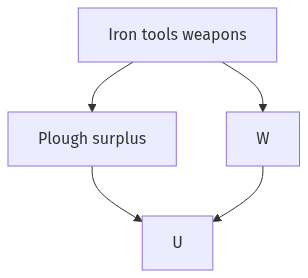
- Cheap iron ploughs and axes opened heavier soils and more forest, which V. Gordon Childe treated as part of a wider productive leap after bronze.
- In India, Painted Grey Ware and later Northern Black Polished Ware sit with iron in the Ganga plains, at sites such as Atranjikhera, Hastinapur, and Kausambi.
- Southern and Deccan megaliths, and sites such as Hallur, show iron, horse, and burial wealth in a different cultural package.
Social and political culture
- Surplus grain supported specialists, coins, and towns, so rank and kingship could thicken into mahajanapadas and later empires.
- Iron weapons and forts changed warfare and tribute, which is a cultural fact of honour, caste-like rank, and royal ritual, not only a metallurgical fact.
- New cults, hero stones, and larger sacrificial and Buddhist or Jaina publics grew on that agrarian base.
- The cultural impact is therefore plough agriculture, craft guilds, urbanism, and a more unequal political order, not the mere presence of rusted blades.
Flow diagram
Conclusion
Iron cheapened clearing, farming, and fighting, and culture followed those new capacities. Indian PGW, NBPW, and megalithic worlds show the same shift in different regional forms.
Quick related
Students also ask
-
Did iron instantly create cities?
No. Iron made surplus and war cheaper. Cities and states still needed trade, ritual, and administration.
-
Is the Indian Iron Age one culture?
No. Ganga PGW–NBPW, Deccan megaliths, and southern iron sites are related by metal, not by a single people.