
Thinker
Critical events and the everyday
Veena Das shifted Indian anthropology from village structure toward violence, suffering and the repaired everyday.
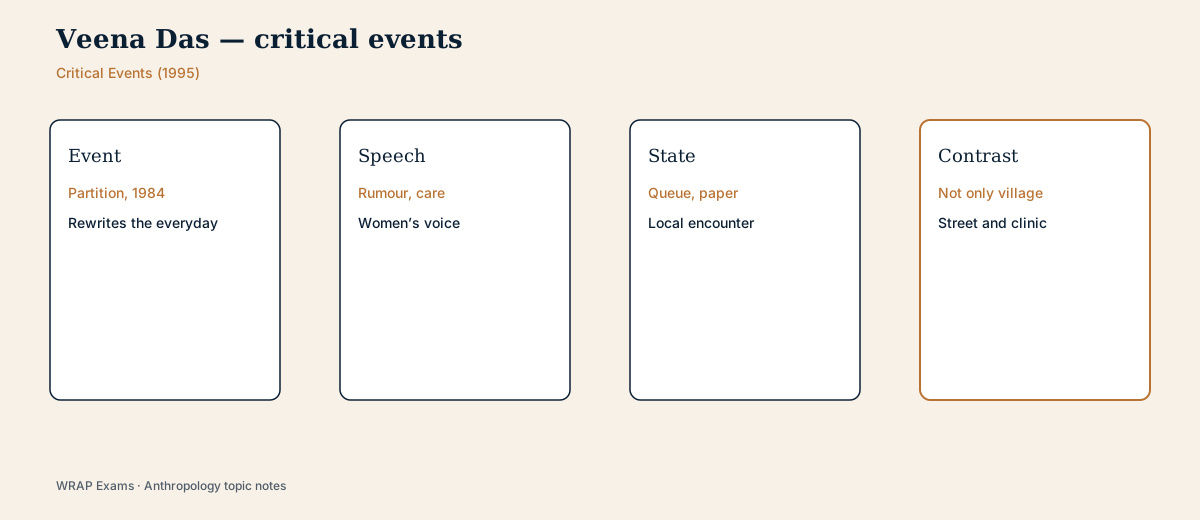
- Critical Events (1995) treats Partition, the 1984 anti-Sikh violence and similar ruptures as events that rewrite how people inhabit law, kinship and the state.
- The point is not only trauma as memory: violence seeps into ordinary speech, rumour, bodily care and neighbourhood suspicion.
- Das asks how survivors remake a livable everyday after the event, not only how they narrate the catastrophe.
- Method: close attention to women’s speech, silence and care work — the political is heard in the household, not only in commissions of inquiry.
Examples
- Partition and 1984 are teaching cases of ‘critical events’: they do not stay in the past tense of history textbooks.
Key points
The state as local encounter
- The state is met in the police station, ration queue, clinic and affidavit — not only as Constitution and Parliament.
- Citizenship is practised through papers, witnesses and waiting; those without documents live a thinner citizenship.
- This pairs well with caste-atrocity and riot questions: hierarchy is enforced in everyday punishment as well as in spectacular violence.
Village-structure anthropology
- Caste ranking, jajmani, dominant caste
- Synchronic social system
- Typical unit: village
Das’s event-and-everyday turn
- Violence, law, rumour, care
- How events rewrite ordinary life
- Typical unit: street, clinic, household speech
WRAP Exams coaching notes for UPSC Anthropology optional. Pair with the official syllabus when you need every heading in order.