
Thinker
Householding among Kashmiri Pandits
Madan showed how Kashmiri Pandit domestic life is organised around household duty and kinship morality.
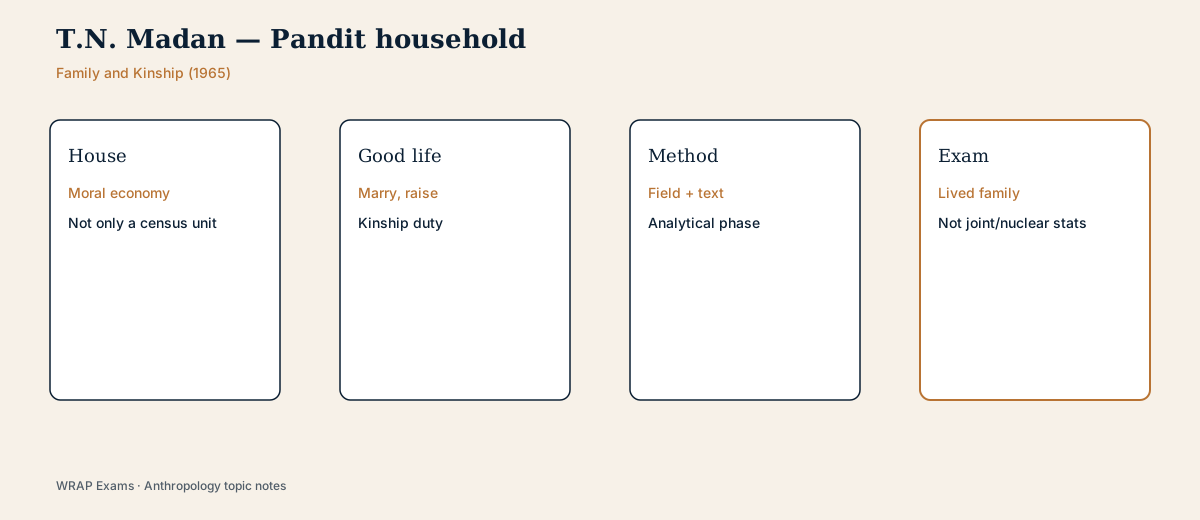
- T.N. Madan’s Pandit studies (especially Family and Kinship: A Study of the Pandits of Rural Kashmir (1965)) treat the house as a moral economy, not only a census unit.
- A ‘good life’ is framed through kinship duty: marriage, raising children, and staying inside household obligation rather than world-renouncing ideals.
- Kinship here is a cultural value system — who you feed, marry and mourn with — not a bare genealogical grid.
- The work sits in the Analytical-phase village/house tradition: intensive fieldwork, local categories, then comparison with textual Hindu ideals.
Examples
- Use Madan when a question asks for family as a lived moral order in a specific Indian community, not only as a syllabus definition of family.
Case
Why the case still works in Mains
- It counters the idea that Indian kinship is only ‘joint family vs nuclear family’ statistics.
- It links Indology (dharma, householdership) to field observation without collapsing one into the other.
- Later displacement and exile of Pandits is a different political history — keep the ethnography of householding distinct unless the question asks for change.
WRAP Exams coaching notes for UPSC Anthropology optional. Pair with the official syllabus when you need every heading in order.