Indigenous Indology and method
G.S. Ghurye — 'father' of Indian sociology; book-view Indology plus social structure.
- Indigenous Indology: interpret India using texts and civilisational categories from within.
- Trained under British sociology yet insisted India needs its own conceptual labour.
- Later critics (field-view) say he over-privileges texts; still indispensable for caste features.
Society, caste and women
- Caste as structural backbone of Hindu society — not a minor custom.
- Wrote on family, kinship and the status of women inside caste-Hindu order.
- Saw reform and modernisation as real, but caste resilience as deeper than law alone.
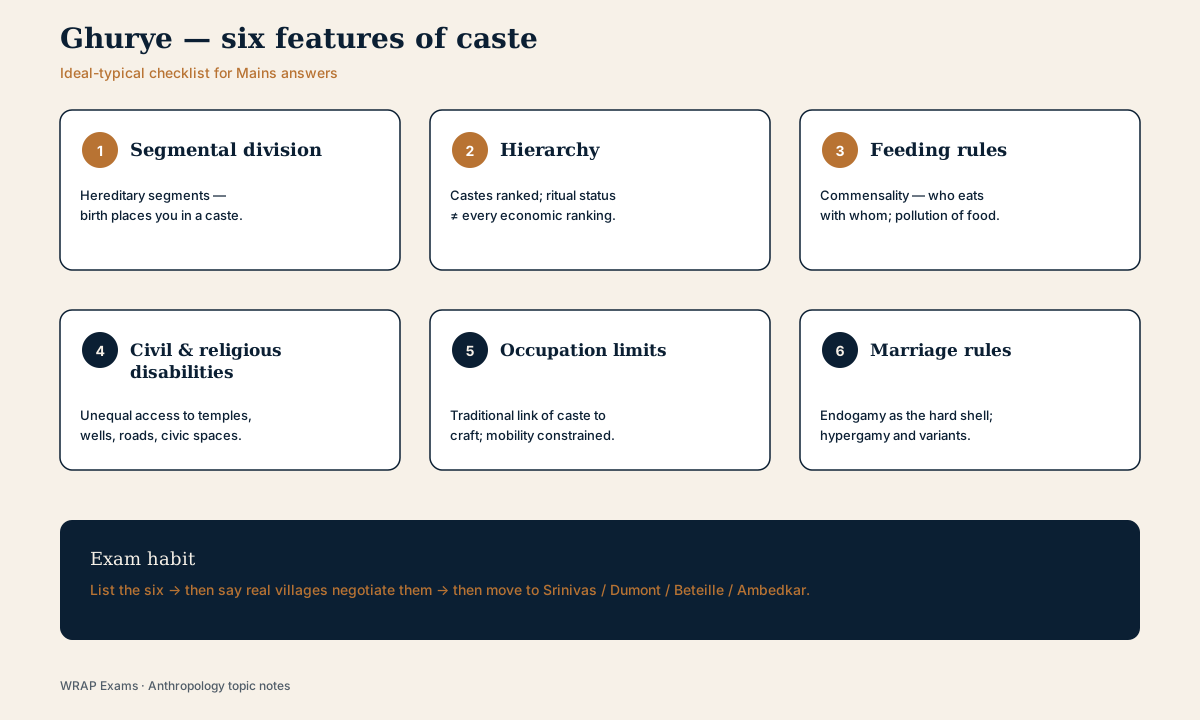
Six features of caste (classic list)
- Segmental division of society — hereditary segments by birth.
- Hierarchy — castes ranked; ritual status ≠ pure economic ranking.
- Restrictions on feeding and social intercourse (commensality).
- Civil and religious disabilities / privileges.
- Lack of unrestricted choice of occupation.
- Restrictions on marriage (endogamy as hard shell).
British rule, change and politicisation
- Colonial census, law and education reified and politicised caste identities.
- Caste associations and public politics grow under colonial public sphere.
- Ghurye worried about caste becoming a political weapon against national unity.
Untouchability and national integration
- Untouchability as extreme disability end of the caste spectrum.
- National integration requires reforming caste hierarchy, not only celebrating diversity.
- Tribes-as-backward-Hindus thesis feeds his assimilationist tribal policy (see policy debate page).
Caste census — for and against (exam frame)
For caste census
- Data for targeted welfare and OBC policy
- Makes inequality measurable
- Corrects under-count of disadvantaged groups
Against / caution
- Risk of reifying and politicising identities
- Ghurye-style fear: caste over nation
- Enumeration can freeze fluid practice
Criticism
- Book-view bias; underplays field process (Srinivas critique lineage).
- Assimilationist tribal reading contested by Elwin and later Adivasi politics.
- Caste features ideal-typical — living India shows mobility, factions, class.
Pair with syllabus short notes for clause-by-clause Paper coverage.