
Definition
What ‘applied’ meant in three phases
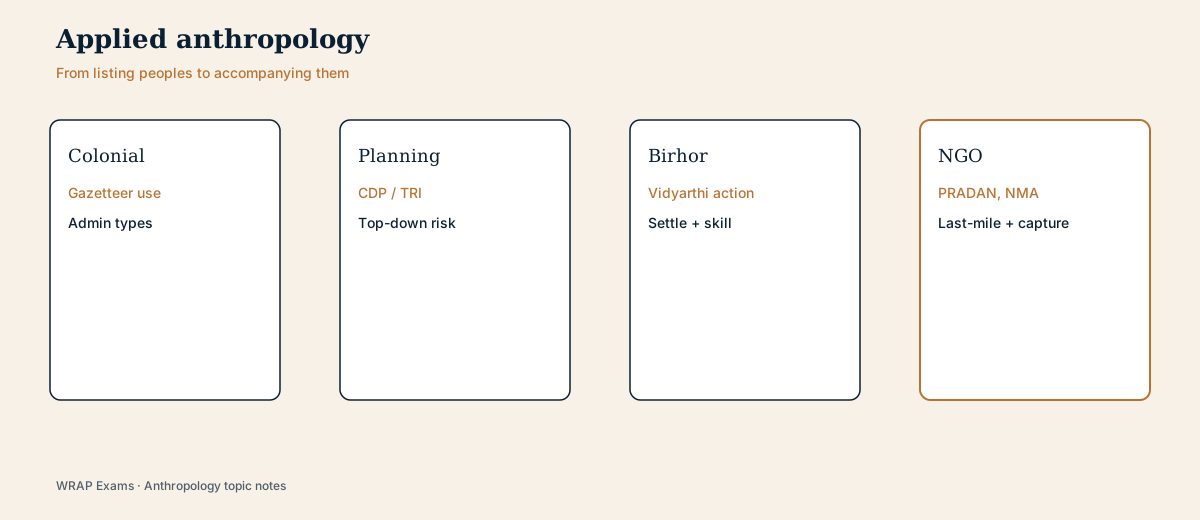
Anthropology’s role in tribal development moved from colonial listing to planning advice to rights-based critique — keep the sequence, do not romanticise any stage.
- Colonial: ethnography as administration — census, gazetteers, ‘criminal tribe’ labels, forest settlement. Knowledge served the state more than the village.
- Nehruvian/planning decades: anthropologists as advisers on integration, community development, NEFA, Tribal Research Institutes.
- After the 1980s–90s: rights, consent, displacement, gender and NGO fieldwork; critique of top-down schemes sits beside still-needed applied work.
| Phase | Typical product | Risk |
|---|---|---|
| Colonial | Monographs, lists, maps | People become administrative types |
| Planning | CDP, TRI notes, resettlement advice | Schemes without land/forest rights |
| Rights era | FRA facilitation, SIA, NGO ethnography | Project capture; NGO as state mouthpiece |
Case
Birhor action research (Vidyarthi)
- L.P. Vidyarthi’s Birhor work is taught as action research: not only description of a hunting-gathering PVTG, but organised attempts to settle, skill and link households to public programmes.
- Steps in the teaching notes: land and technique, settlement and agriculture, then hook-up with the Tribal Sub-Plan machinery.
- Exam use: applied anthropology can mean accompanying a community through livelihood change, not only writing a sympathetic essay.
- Limit: ‘success’ on paper can hide loss of forest mobility and new dependence — always add a sentence on trade-offs.
Examples
- Pair Birhor with Bhowmick’s Bidisa work among Lodhas: two Central Indian experiments in rehabilitation after stigma and displacement.
Key points
NGOs, MOTA and the last mile
- NGOs can do what a block office often cannot: language, trust, flexible timing. PRADAN-type livelihood groups and local mothers’ associations are standard illustrations.
- Limits: donor geography (work where funds are), neglect of smaller PVTGs, overheads, and the risk of becoming a government contractor.
- Ministry of Tribal Affairs (MoTA) schemes and Tribal Sub-Plans are the official spine; anthropologists should know the machinery even when criticising it.
- Xaxa Committee remains the best single critique of implementation gaps — Schedules, PESA, land, education — for a 15-marker close.
WRAP Exams coaching notes for UPSC Anthropology optional. Pair with the official syllabus when you need every heading in order.