
Revision summary
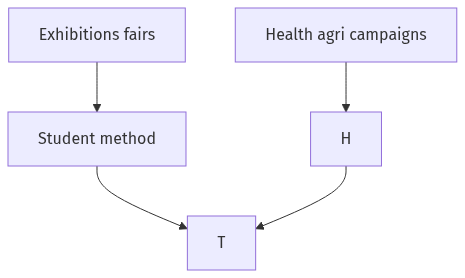
Science exhibitions and vigyan melas are U.P.’s public classroom for method. University and planetarium outreach reach towns without museums. Health and farm campaigns are scientific temper when they explain evidence. Rumour control and message verification are part of the same work. A fair is not enough without school labs and teacher time.
Model answer
Introduction
A scientific approach is a habit of evidence, not a laboratory building. In Uttar Pradesh, exhibitions, vigyan melas, and campaigns are the public classroom that reaches students and households who will never enter a research park.
Body
Exhibitions and fairs
- School and district science exhibitions make a child test a model in front of peers, which is how method beats rote for a day.
- University open days, planetarium shows in Lucknow, and mobile science vans carry instruments to towns that have no museum.
- National Science Day and state vigyan parishad events give a calendar so that scientific temper is not only an exam chapter.
- Agri and health stalls at the same fairs link science to seed, vaccine, and water testing, which is U.P.’s real public science.
Campaigns
- Immunisation, anaemia, and TB campaigns are scientific approach in the ward if they explain the shot, not only order it.
- Anti-superstition and eclipse-safe-viewing drives still matter in a state where rumour travels faster than a lab result.
- Digital literacy campaigns are science-and-society work when they teach verification of messages, not only how to open an app.
Limit
- A mela is a spark. Without school labs, teacher time, and honest public data, the spark dies after the stall is packed.
Flow diagram
Conclusion
Exhibitions, fairs, and campaigns spread a scientific approach in U.P. by making method visible in schools and streets. They work when they join vaccines, farms, and fact-checking. They fail if they are only a ribbon and a quiz prize.
Quick related
Students also ask
-
Describe the benefits and challenges of Women's and Child Welfare Schemes implemented in Uttar Pradesh in the last decade.
Next question in the 2025 paper (Q11). View answer →
-
Do exhibitions replace school laboratories?
No. They spark interest. Daily scientific approach still needs a working school lab and a teacher.
-
Is a health campaign a science campaign?
Yes, if it explains evidence and consent. A campaign that only threatens or advertises is not scientific temper.
Same topic · past papers
UPPSC has asked this before
These previous-year questions sit on the same topic. Open one to practise the earlier ask.
-
2025 · Q7 · UPGS6 · 8 marks
Mention the guidelines of Uttar Pradesh Government for scientific processing and disposal of municipal waste. -
2024 · Q10 · UPGS6 · 8 marks
What are the major scientific challenges for Uttar Pradesh in becoming a trillion-dollar economy?
More from this paper
Q1 · UPSC Mains 2025 · UPGS6 · 8 marks · Solution
Discuss the recent tax reforms undertaken by the Uttar Pradesh Government.
Public finance and ODOP
U.P. tax reform after GST is mainly stamp duty, electricity duty, SGST incentives, and online commercial tax. Industrial policy uses those three state tools to attract plants. Digitised registration and e-way bills cut compliance delay. Households see stamp-duty concessions more clearly than GST rates, which are Union-led. The state cannot rewrite GST slabs; it can only run administration and property-linked taxes better.
Q2 · UPSC Mains 2025 · UPGS6 · 8 marks · Solution
What is the concept of Invest U.P.? Evaluate its role in the economic development of Uttar Pradesh.
Schemes, skill and investment
Invest U.P. is the state investment promotion agency, not a factory owner. It markets sectors and walks files through Nivesh Mitra. Summits and land banks are the pitch; after-care is the development test. It helps a land-locked state compete on speed of clearance. It cannot substitute power, logistics, or skills.
Q3 · UPSC Mains 2025 · UPGS6 · 8 marks · Solution
What is "Green Star Rating System" launched in 2025?
Economy, budget and industry of UP
U.P. launched a Green Star Rating in 2025 as a state mark for greener buildings and industry. Stars rest on energy, water, and waste performance. The rating is a signal for buyers and departments, not a replacement for pollution law. It has no privately invented ISO number in this answer. Its worth depends on audit, not on the logo alone.