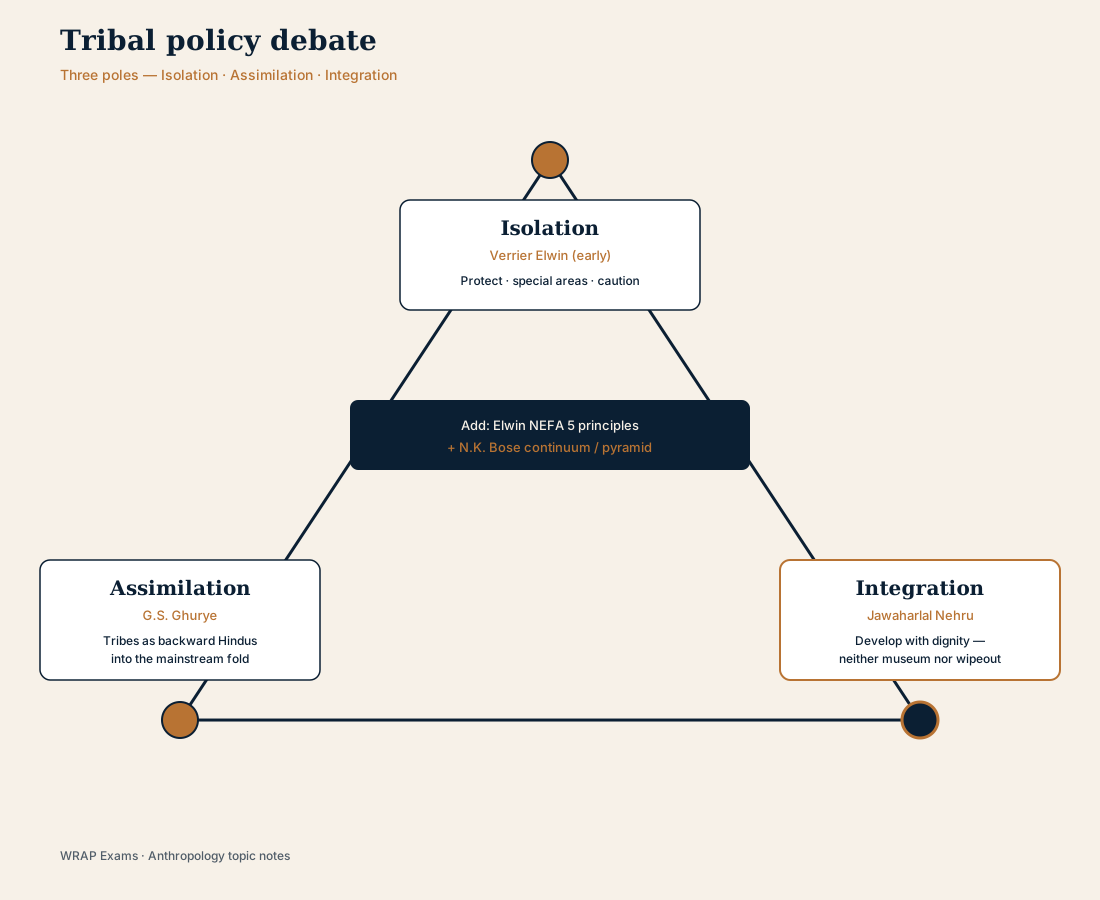
Three poles
Classic UPSC triangle: Elwin isolation, Ghurye assimilation, Nehru integration.
| Pole | Thinker | Core line | Risk if extreme |
|---|---|---|---|
| Isolation | Verrier Elwin (early) | Protect tribal life; special areas / park logic | Museumisation; deny citizenship goods |
| Assimilation | G.S. Ghurye | Tribes as backward Hindus; join caste-Hindu mainstream | Erase autonomy; cultural violence |
| Integration | Jawaharlal Nehru | Develop with dignity; neither force nor museum | Vague without land/forest rights |
Elwin — isolation (early)
- Rapid contact destroys tribal institutions (ghotul, land, ritual).
- National parks / excluded areas thinking in early protective mode.
- Later Elwin closer to Nehruvian integration (NEFA principles).
Ghurye — assimilation
- Tribes = backward Hindus; already on path into Hindu society.
- Separate 'tribalism' as policy weakens national unity.
- Links to Indigenous Indology and fear of political fragmentation.
Nehru — integration
- Develop along their genius; respect land and forest; build local capacity.
- Avoid over-administration; judge by human quality not spend.
- NEFA five principles = operational creed of integration (see Elwin page).
Bose link
- HMTA and tribe–caste continuum explain how absorption already happens culturally.
- Policy can accelerate or humanise that process — Bose is analytical bridge, not a fourth pole only.
- Pyramid of unity: diversity inside a civilisational frame.
Isolation vs Assimilation
- Protect difference
- Limit contact speed
- Risk: exclusion from rights
Integration (middle path)
- Rights + development
- Respect culture
- Local capacity first
Pair with syllabus short notes for clause-by-clause Paper coverage.