
Models
Why stand up — competing models
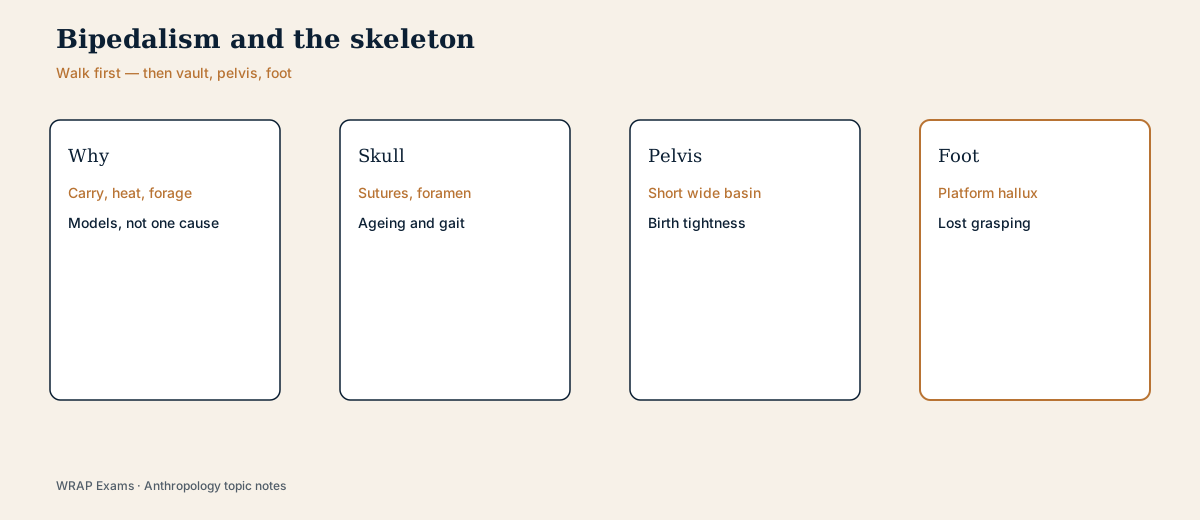
Bipedalism is the first hominin flag. The ‘why’ is a set of models; the ‘how’ is the skeleton.
- No single agreed cause. Teaching list: carrying, seeing over grass, thermoregulation, foraging (reach and haul), display, walking efficiency on the ground after trees thin.
- Costs: blood column and varicose veins, difficult birth through a narrow pelvis, lumbar strain — bipedalism is a trade, not an upgrade sticker.
Anatomy
Skull, sutures, pelvis, foot
- Vault bones: frontal, parietals, occipital, temporals. Coronal, sagittal, lambdoid, squamous sutures — ageing and trauma in forensic work use these lines.
- Foramen magnum moves under the skull as the spine stacks vertically.
- Pelvis: basin of ilium–ischium–pubis; human blade is shorter and wider than an ape’s for viscera and birth.
- Foot: platform, aligned toes, hallux not for grasping. Non-opposable big toe is a bipedal signature.
- Face trend in later Homo: smaller ridges, vertical forehead, smaller jaws and teeth, a chin — diet and speech-muscle stories both circulate.
| Region | Bipedal change | Exam cost |
|---|---|---|
| Skull base | Anterior foramen magnum | Neck and balance |
| Pelvis | Short wide basin | Birth tightness |
| Foot | Platform, non-opposable hallux | Lost grasping |
WRAP Exams coaching notes for UPSC Anthropology optional. Pair with the official syllabus when you need every heading in order.