
Revision summary
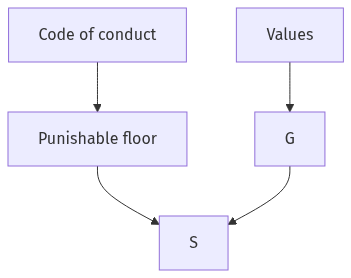
Conduct rules name gifts, politics, trade, and courtesy, and they can be punished. A code equalises a large service and is necessary hardware. It is not sufficient because loopholes, new harms, and silent gaps remain. Values such as integrity, impartiality, compassion, and courage fill those gaps. Values interpret the code; they do not create a private law.
Model answer
Introduction
A code of conduct tells the officer what the service forbids. Values tell the officer what to do when the code is silent, delayed, or being gamed.
Body
What a code can do
- The All India Services (Conduct) Rules and Central Civil Services (Conduct) Rules name gifts, political work, private trade, and courtesy.
- A code is public, inspectable, and punishable, which a private sermon is not.
- It equalises a large service so that integrity is not left to each household’s custom.
- It is necessary hardware: without it, values become a mood that a strong minister can ignore.
Why a code is not sufficient
- Rules are incomplete; they cannot list every tender trick or every cruel use of a lawful power.
- A clever officer can keep the letter and kill the spirit, which is the ethics of the loophole.
- Codes lag behind new harms such as a personal social-media verdict or an opaque algorithm.
- Fear-based compliance lasts while the vigilance camera is on; values last in a remote posting.
- Empathy, courage, and constitutional morality are not fully captured in a gift ceiling.
Values beyond rules
- Integrity is telling the truth in the note when a false comfort would be safer.
- Impartiality is the same licence standard for the connected and the unknown.
- Compassion is using discretion toward the weakest without breaking the rule for a favourite.
- Courage is recording dissent.
- These values interpret the code; they do not license a private law.
Combined answer
- The service needs both: a code that can punish, and values that can guide the gap.
- Training, example, and protection of whistle-blowers grow values; vigilance grows the code.
- Sufficiency therefore belongs to neither alone.
Flow diagram
Conclusion
A code of conduct is necessary and not enough. Public service needs values beyond the rule book so that the officer remains fair when the book has no line for the case.
Quick related
Students also ask
-
Why are tolerance and sympathy necessary qualities for a civil servant to promote mental health among the weaker sections of society? Give answer with suitable arguments.
Next question in the 2025 paper (Q16). View answer →
-
If I never break the code, am I ethical?
You are formally compliant. Ethics still asks whether you used silence, delay, or a loophole to harm a right.
-
Can values justify breaking a conduct rule?
A clearly illegal order is different from a taste. Values do not authorise a gift or a partisan post in the name of a higher good.
Same topic · past papers
UPPSC has asked this before
These previous-year questions sit on the same topic. Open one to practise the earlier ask.
-
2024 · Q3 · UPGS4 · 8 marks
Discuss the various skills by which a public servant may enhance public commitment to the rules of law. -
2023 · Q11 · UPGS4 · 12 marks
What do you understand by Ethical Governance? Elucidate with example. -
2021 · Q4 · UPGS4 · 8 marks
Describe the relevance of the following in the context of civil services: (a) Ethical Governance (b) Probity in public life.
More from this paper
Q1 · UPSC Mains 2025 · UPGS4 · 8 marks · Solution
Defining value; explain the distinctive features of human values and the role of the family in inculcating these values.
Civil Service aptitude and values
A value is a stable standard that guides worthy choice, not a passing mood. Human values are taught, claim universal worth, join conscience to conduct, and can be justified in public. The family is the first school of trust, empathy, and honour through daily example. A closed home can also plant prejudice, so the family’s power is not automatically ethical. Later schools and offices confirm or correct that first map.
Q2 · UPSC Mains 2025 · UPGS4 · 8 marks · Solution
Evaluate the contemporary relevance of Chanakya's life and thoughts in the context of ethical and people-centric governance.
Emotional Intelligence
Kautilya judges the ruler by the happiness and security of subjects. Yogakshema, a tested service, and honest accounts remain usable tests of ethical administration. Danda is lawful restraint of the strong, not personal cruelty. A democracy cannot import palace deceit; rights and publicity now bind the officer. The living lesson is welfare plus fiscal integrity under the Constitution.
Q3 · UPSC Mains 2025 · UPGS4 · 8 marks · Solution
Discuss the Aristotelian view of virtues and its application in administrative affairs.
Emotional Intelligence
Aristotle’s moral virtue is a stable habit of the mean, learned by practice. Courage, temperance, and justice are civic virtues an officer must show in files, not only in speech. Phronesis is practical wisdom that finds the right mean in a live case. Administration applies this as honest noting, fiscal restraint, and equal treatment. Office culture can train vice; example and rules can still rebuild the mean.