
Revision summary
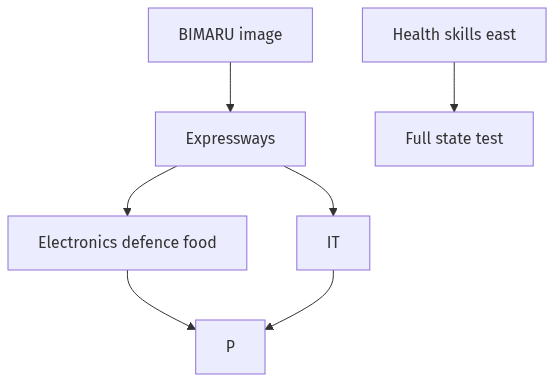
BIMARU was a social-indicator stereotype; U.P. now pitches GSDP, expressways, and plants. Key manufacturing areas are electronics, defence corridor, food processing, and expressway townships. IT sits in Noida and is expanding in Lucknow and other cities. Airports and metros cut the land-locked excuse. The shift is uneven until Bundelkhand, the east, skills, and nutrition catch up.
Model answer
Introduction
BIMARU named a poor-health, poor-income Hindi-belt stereotype. Uttar Pradesh still carries density and job stress, but expressways, electronics, defence nodes, and Noida–Lucknow IT are a different industrial map. The evolution is real in pockets and unfinished in human development.
Body
From BIMARU to a new pitch
- BIMARU pointed to weak social indicators; the new pitch is GSDP size, expressway industry, and investor summits.
- Manufacturing is no longer only Kanpur mills in memory: mobiles, electronics, food processing, leather, and defence ancillaries are the live list.
- IT and IT-enabled services sit in Noida–Greater Noida and are being pushed in Lucknow, Kanpur, and new IT cities, including Global Capability Centres.
- Airports, metro, and freight corridors cut the old land-locked excuse, though last-mile power and skills still decide a plant.
Key areas
- Electronics and mobile manufacturing in Noida and Yamuna Expressway parks.
- Defence Industrial Corridor nodes from Aligarh through Jhansi to Lucknow and Kanpur.
- Food processing and ODOP clusters across districts.
- Data centres, film and services, and public digital delivery as the IT-services story.
- Expressway industrial townships that try to urbanise manufacturing beyond old mill towns.
- Renewable and green-hydrogen invitations as the next energy-industry layer.
Critical note
- NCR and Lucknow must not be mistaken for Bundelkhand and the poor east; the powerhouse is uneven.
- BIMARU social wounds — nutrition, learning, women’s work — still tax the manufacturing story if labour is unhealthy and under-skilled.
- Evolution is therefore a corridor and a campus story first, a statewide human-development story still in transit.
Flow diagram
Conclusion
U.P. is moving from a BIMARU label toward manufacturing and IT in electronics, defence, food, expressway townships, and Noida–Lucknow services. The key areas are real. The powerhouse claim is honest only if Bundelkhand and the east join the same map, and if skills and health catch the factories.
Quick related
Students also ask
-
Explain the role of research facilities of DST, FIST and SATHI in contributing to science and technology innovation in Uttar Pradesh.
Next question in the 2025 paper (Q19). View answer →
-
Has U.P. fully left the BIMARU social profile?
No. Industry pockets have moved faster than nutrition, learning, and women’s work in many districts.
-
Is IT only Noida?
Noida is the thick base. Lucknow, Kanpur, and new IT parks are the expansion bet, still thinner than NCR.
Same topic · past papers
UPPSC has asked this before
These previous-year questions sit on the same topic. Open one to practise the earlier ask.
More from this paper
Q1 · UPSC Mains 2025 · UPGS6 · 8 marks · Solution
Discuss the recent tax reforms undertaken by the Uttar Pradesh Government.
Public finance and ODOP
U.P. tax reform after GST is mainly stamp duty, electricity duty, SGST incentives, and online commercial tax. Industrial policy uses those three state tools to attract plants. Digitised registration and e-way bills cut compliance delay. Households see stamp-duty concessions more clearly than GST rates, which are Union-led. The state cannot rewrite GST slabs; it can only run administration and property-linked taxes better.
Q2 · UPSC Mains 2025 · UPGS6 · 8 marks · Solution
What is the concept of Invest U.P.? Evaluate its role in the economic development of Uttar Pradesh.
Schemes, skill and investment
Invest U.P. is the state investment promotion agency, not a factory owner. It markets sectors and walks files through Nivesh Mitra. Summits and land banks are the pitch; after-care is the development test. It helps a land-locked state compete on speed of clearance. It cannot substitute power, logistics, or skills.
Q3 · UPSC Mains 2025 · UPGS6 · 8 marks · Solution
What is "Green Star Rating System" launched in 2025?
Economy, budget and industry of UP
U.P. launched a Green Star Rating in 2025 as a state mark for greener buildings and industry. Stars rest on energy, water, and waste performance. The rating is a signal for buyers and departments, not a replacement for pollution law. It has no privately invented ISO number in this answer. Its worth depends on audit, not on the logo alone.